Family-owned wet pet food manufacturing in Northern Ireland since 1972
+44 (0) 28 8778 4641
Family-owned wet pet food manufacturing in Northern Ireland since 1972
+44 (0) 28 8778 4641
High-margin, market-tested pet snacks and wet nutrition ready for private label packaging, custom branding, and fast container dispatch to Kenya.
Years Manufacturing Pedigree
Global Export Markets
Batch Traceability & Safety
Strict Nutritional Compliance
The pet care economy across East Africa—anchored by Kenya's rapidly urbanizing middle class in metropolitan hubs like Nairobi, Mombasa, Nakuru, and Eldoret—is undergoing a profound structural shift. Historically dependent on home-cooked table scraps or unbranded agricultural byproducts, Kenyan pet owners are aggressively transitioning to commercial, scientifically formulated pet nutrition. This evolution is fueled by increasing pet humanization, expanding veterinary clinic networks, and the rapid growth of modern retail channels such as Carrefour, Naivas, and specialized online platforms like Jumia Kenya.
For distributors, supermarket brands, and entrepreneurial pet companies aiming to capture market share in Kenya, establishing a resilient supply chain with an established contract manufacturer is paramount. Importing unbranded commodities or low-grade products exposes businesses to severe quality fluctuations, regulatory friction with the Kenya Bureau of Standards (KEBS), and product spoilage due to tropical humidity and long transit times. Partnering with dedicated private label factories equipped with advanced thermal retort technology, freeze-drying facilities, and strict EU/FEDIAF quality controls provides the competitive moat necessary to build a dominant domestic brand.
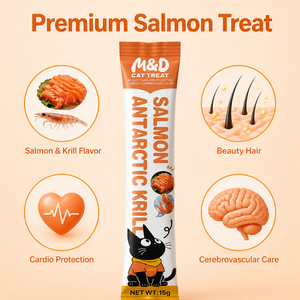
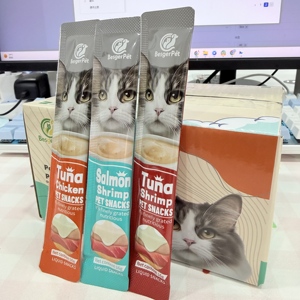
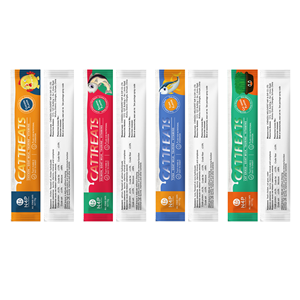
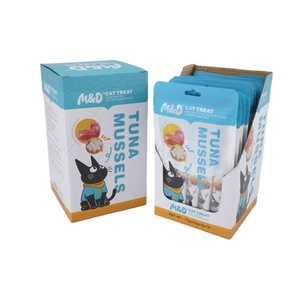
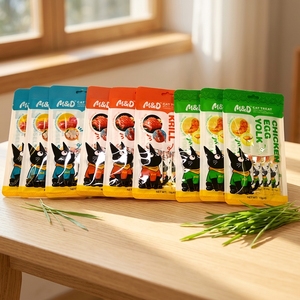
Data indicates that while dry kibble maintains baseline volume, high-protein wet pet food, lickable cat cream pouches, and single-serve treats are achieving double-digit growth in East Africa. In warm climates, wet food serves dual purposes: essential hydration and superior palatability. Creamy squeezable snacks (such as 15g cat sticks) offer high unit margins, lower shipping weight per unit, and rapid consumer conversion at retail checkout counters.
Designing pet food for the East African market requires a nuanced understanding of local distribution infrastructure, climate resilience, and consumer feeding behaviors. Below are the primary application scenarios where our OEM/ODM private label formulations deliver maximum market performance:
Kenya’s coastal regions (Mombasa, Malindi) experience elevated humidity and heat. Our private label wet cat food cans, foil trays, and squeezable pouches undergo rigorous retort sterilisation with validated thermal process lethality ($F_0 \ge 3.0$). This eliminates bacterial pathogens and ensures a stable shelf life of 24 to 36 months without requiring artificial preservatives or cold-chain logistics.
As pet owners in Nairobi seek specialized nutrition for indoor cats and active dogs, demand for functional ingredients has surged. We formulate grain-free wet recipes enriched with Omega-3 and Omega-6 fatty acids (sourced from natural salmon and tuna) to support coat health, added Taurine for feline cardiac function, and prebiotic fibers for optimal digestive health.
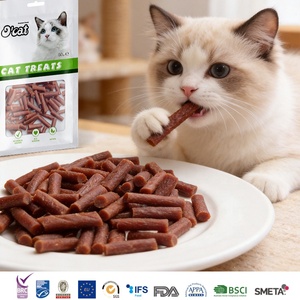
Modern supermarket chains rely on high-velocity impulse items near checkout lanes. Squeezable creamy cat treats (15g pouch sticks) and freeze-dried paw-shaped lollipops represent lightweight, visually attractive packaging options that generate high repeat purchases and excellent retail margin ratios for Kenyan importers.
Selecting a manufacturing partner is a long-term strategic decision. Backed by over 50 years of family-owned wet pet food manufacturing expertise (tracing back to our founding in 1972), our production ecosystem offers absolute transparency, scale, and operational reliability.
Unlike third-party traders or unverified packagers, our integrated facilities manage the entire production chain under one roof: raw material intake, scientific recipe formulation, automated batch cooking, precise filling, retort sterilisation, micro-testing, seam integrity verification, and container loading. Every product shipped to Kenya adheres strictly to international nutritional standards set by FEDIAF (European Pet Food Industry Federation) and AAFCO.
For Kenyan brands evaluating pet food sourcing options, comparing structural capabilities reveals why direct factory manufacturing provides decisive long-term market advantages:
| Specification & Quality Metric | Direct Factory OEM/ODM (Our Facility) | Generic Commodity Trading Suppliers |
|---|---|---|
| Nutritional Compliance | Full FEDIAF / AAFCO complete & balanced profiling | Unregulated ingredient ratios, variable protein content |
| Thermal Sterilisation ($F_0$) | Fully computer-controlled retort cycles ($F_0 \ge 3.0$) | Inconsistent boiling or manual canning, high spoilage risk |
| KEBS Import Documentation | 100% compliant Health Certificates, Certificate of Analysis (CoA) | Generic paperwork causing frequent customs holds at Mombasa |
| Shelf Life Stability | 24–36 months guaranteed ambient stability | Short or unpredictable shelf life prone to oxidation |
| Flavor Customization | Tailored poultry, salmon, tuna, beef, and grain-free formulas | Fixed stock recipes with minimal customization options |
| Packaging Seam Guarantee | Automated double-seam verification & drop-test certified | Manual or semi-automated sealing subject to micro-leaks |
| Batch Consistency | Precision batching software with <0.5% variance | High batch-to-batch color, aroma, and texture shifts |
Exporting pet food into Kenya requires strict adherence to national import protocols established by government agencies including the Kenya Bureau of Standards (KEBS) and the Kenya Revenue Authority (KRA). Failure to comply with documentation rules can lead to expensive demurrage charges at the Port of Mombasa or container re-exportation.
Our experienced export logistics team works directly with Kenyan importers, freight forwarders, and clearing agents to ensure a seamless end-to-end supply chain. We provide comprehensive documentation packages for every shipment:
We facilitate Pre-Export Verification of Conformity (PVoC) inspections through authorized international partners (such as SGS or Intertek) to obtain the mandatory Certificate of Conformity (CoC) prior to vessel departure.
Every shipment is accompanied by official government-issued Health and Veterinary Inspection Certificates verifying that animal proteins are sourced from disease-free regions and rendered under safe thermal conditions.
We optimize container cube utilization for 20ft and 40ft High Cube FCL shipments. Products are securely slip-sheeted or shrink-wrapped on heat-treated ISPM-15 compliant wooden pallets to prevent transit damage during sea transit to Mombasa.
Clear, technical answers to common queries raised by distributors, supermarket buyers, and pet brand owners in East Africa.
Minimum order quantities depend on the specific product format and packaging choice. For standard 15g lickable cat treat pouches and wet cat food sticks, MOQs typically start at full pallet quantities per flavor, scaling up to full container loads (FCL 20ft or 40ft) for custom printed film rolls and bespoke can lithography. We offer flexible consolidated container solutions for brand launches.
Our wet cat foods and creamy treats undergo high-pressure thermal retort sterilisation, achieving complete commercial sterility. Combined with multi-layer high-barrier foil packaging (Pouch/Aluminum film), our products are protected against oxygen ingress, moisture absorption, and UV degradation, delivering an ambient shelf life of 24–36 months even under equatorial conditions.
Yes. Our R&D team specializes in OEM/ODM recipe development. We can adjust protein sources (Tuna, Salmon, Chicken, Beef), grain-free ratios, viscosity level of creamy cat snacks, and functional additive packages (e.g., joint care, hairball control, omega oil fortification) to match your brand positioning in the Kenyan market.
For initial private label projects, artwork sign-off, packaging plate creation, and recipe validation generally take 3 to 4 weeks. Manufacturing and quality testing require approximately 2 to 3 weeks. Maritime transit from our factory to the Port of Mombasa typically ranges between 25 and 35 days, bringing total project lead time to 8–12 weeks for inaugural shipments, with faster turnarounds on repeat orders.
Our regulatory and design team works closely with clients to ensure artwork complies with Kenyan labeling guidelines (including English/Swahili text requirements, net weight declarations, guaranteed analysis panels, ingredient lists, and batch coding positioning) to ensure smooth customs clearance.
Yes. Our production facilities operate under strict HACCP quality management systems, maintain third-party food safety certifications, and align formulations with FEDIAF standards. Every production run undergoes complete physical, chemical, and micro-testing before finished goods release.
Connect with our global commercial export team to discuss product specifications, sample requests, target price structures, and container logistics for East Africa.