Family-owned wet pet food manufacturing in Northern Ireland since 1972
+44 (0) 28 8778 4641
Family-owned wet pet food manufacturing in Northern Ireland since 1972
+44 (0) 28 8778 4641
High-protein, clean-label OEM/ODM feline snacks engineered for international retail distribution and brand scaling.
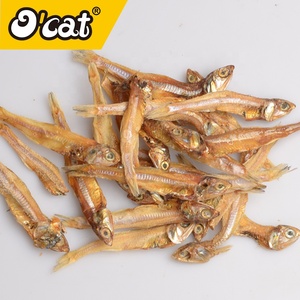
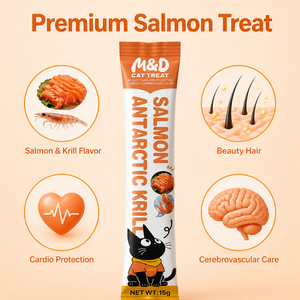
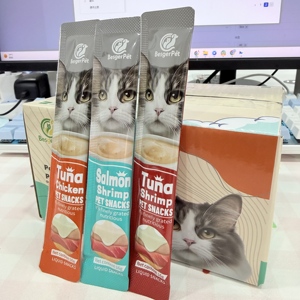
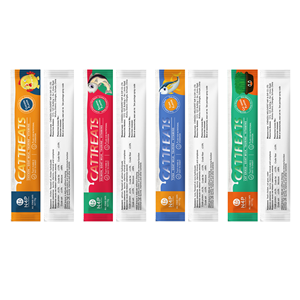
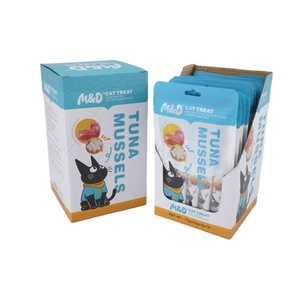
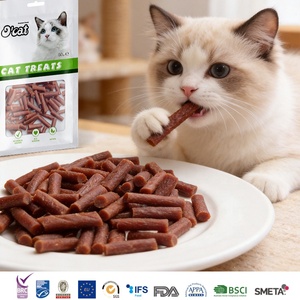
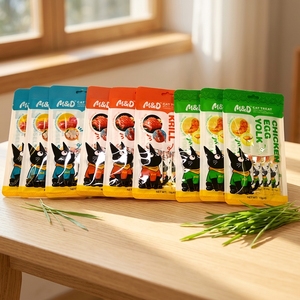
Modern pet food procurement is undergoing a paradigm shift driven by the "pet humanization" macro-trend and rigorous nutritional scrutiny. Search queries surrounding cat jerky suppliers, private label dehydrated cat snacks, high-protein feline treats, and OEM pet food factories no longer seek mere commodity sourcing. Global buyers, brand owners, and retail procurement managers search with intent grounded in Information Gain: seeking verifiable technical specs, thermal dehydration parameters, water activity controls, and robust food safety compliance protocols.
Cats are obligate carnivores requiring a diet rich in biologically available animal protein. Unlike canine treats, cat jerky manufacturing demands absolute precision in moisture activity ($a_w$), amino acid preservation (specifically taurine), and texture profile engineering. Commercial procurement intent centers around eliminating synthetic binders, preventing microbial proliferation without heavy chemical preservatives, and maintaining single-site manufacturing transparency.
Built on over five decades of family-owned pet nutrition expertise, operating with single-site accountability and industrial technical rigor.
From raw meat intake, emulsification, moisture-controlled dehydration, to thermal retort sterilisation and automated packaging—every step occurs under single-factory governance to eliminate cross-contamination risk.
In-house food technologists design jerky and wet strip formulas tailored to life stages (Kitten, Adult, Senior) and dietary needs (Grain-Free, Single-Protein, Hairball Control), validated by chemical and palatability panels.
Advanced hot-air dehydration and retort thermal processing strictly maintain water activity ($a_w < 0.65$) in jerky chews, inhibiting Salmonella, Listeria, and mold growth without reliance on artificial additives.
To evaluate potential cat treat contract manufacturers, procurement directors must analyze operational capabilities against industry standard metrics. Below is our benchmark operational control profile:
| Manufacturing Parameter | Commodity Treat Factory | Mackle Technical Standard | Procurement Advantage |
|---|---|---|---|
| Raw Material Traceability | Batch-level paper logs | Full digital ERP barcode tracing (farm-to-pouch) | Zero-recall security & rapid audit compliance |
| Nutritional Formulation | Standard fill / high starch binders | High muscle meat, grain-free, zero filler | Higher palatability & bio-availability |
| Moisture Control Range | Variable (±5% variance) | Precision $a_w$ testing (±0.01 precision) | Extended shelf stability without oxidation |
| Sterilisation Method | Basic air drying | Retort thermal sterilisation & hot-air drying | Elimination of spore-forming pathogens |
| Export Compliance | Regional paperwork only | EU / UK / US FDA / Global export certified | Seamless cross-border customs entry |
As consumer expectations shift toward clean labels and functional health claims, private label cat treat brands must adapt their procurement strategies. Key trends dominating the market include:
Modern pet parents view treats as functional delivery systems. Incorporating active nutrients—such as Omega-3 fatty acids (EPA/DHA) for coat gloss, glucosamine for joint health, L-carnitine for weight management, and prebiotic fibers (FOS/MOS) for gut motility—into cat jerky and lickable puree sticks represents a major growth vector for OEM brands.
Allergies and food sensitivities in felines are driving demand for mono-protein jerky options. Sourcing novel proteins such as wild-caught salmon, deep-sea tuna, duck breast, and free-range venison offers brands a premium shelf positioning with superior margin structures.
While traditional hard jerky remains popular for dogs, cats often prefer softer, pliable textures or high-moisture creamy snacks (15g stick formats). Multi-texture formulations—such as freeze-dried jerky dusted with hydrolysed liver powder or soft-moist bite-sized jerky blocks—are outperforming standard kibble-style treats in retail sell-through rates.
Retailers across the EU and North America are prioritizing recyclable mono-material barrier pouches. Nitrogen-flushed packaging formats that protect delicate fats from lipid oxidation while meeting environmental ESG targets are becoming mandatory in tier-1 distribution agreements.
Developing a commercial cat jerky or wet treat line requires balancing palatability, shelf-life, and cost-in-use. Our R&D framework focuses on three crucial biochemical pillars:
During the thermal dehydrating phase of jerky chews, controlled heat application facilitates the natural Maillard reaction between amino acids and reducing sugars. This process releases natural aroma compounds that naturally stimulate feline olfaction without requiring artificial flavor enhancers or hydrolysed spray coats.
For liquid and creamy wet snacks (such as 15g squeezable sticks), achieving optimal shear viscosity ensures the treat dispenses smoothly without separating or weeping liquid. Utilizing natural tapioca starch or natural gum matrices ensures high temperature stability during retort sterilisation while retaining an appetizing mouthfeel.
Navigating private label contract manufacturing requires a transparent, structured pathway. With 53+ years of family-owned manufacturing legacy in Northern Ireland, our standard OEM workflow achieves first production within 12 to 20 weeks:
Essential guidance for international buyers, retail managers, and private label brand owners.
MOQs are established based on format and recipe complexity. As a full-scale commercial pet food manufacturer operating automated lines, our runs are typically planned in full pallet or container quantities (e.g., FCL or LCL shipments). This allows us to optimize landed costs and deliver competitive unit pricing for distributors and retail multiples. Specific MOQs can be calculated upon reviewing your packaging specification.
Shelf life stability is achieved through precise water activity ($a_w$) control, moisture-proof barrier foil packaging, and optional nitrogen gas flushing to prevent oxidation of natural fats. Every batch undergoes accelerated temperature shelf-life validation and microbiological testing to ensure quality remains uncompromised over 18 to 24 months without reliance on synthetic chemical preservatives.
Yes. Our R&D team specializes in custom recipe development. We can formulate unique flavor combinations (such as Tuna & Salmon blend, Chicken & Pumpkin, or Duck Jerky), custom physical shapes (such as paw prints, strips, bites, or lollipops), and incorporate functional health premixes targeting hairball care, dental hygiene, or joint support.
All recipes are formulated to strictly align with FEDIAF (European Pet Food Industry Federation) and AAFCO nutritional profiles. Our manufacturing facilities operate under comprehensive HACCP food safety systems, supported by in-house laboratory testing and independent third-party audits to guarantee absolute batch purity, seam integrity, and raw material traceability.
A new private label project moving from initial brief to first commercial container shipment typically takes between 12 and 20 weeks. This timeline covers formula customization, palatability trials, packaging artwork printing approvals, shelf-life verification, and factory trials. For existing standard factory formulas with custom outer labeling, lead times can be significantly reduced.
Yes. We regularly supply distributors, brand owners, and grocery retail networks across Europe, the Middle East, Asia, and the Americas. Our experienced commercial export department prepares all required health certificates, free-sale certificates, origin declarations, and localized multi-language packaging to ensure hassle-free customs clearance.
Transform your pet treat portfolio with high-protein jerky chews, natural lickable treats, and custom OEM formulas engineered for global brand success.
Inquire Now