Skip to content
0%

China’s pet food market is expanding, but packaging decisions remain surprisingly uneven. Contract Pet Food Packaging can influence freshness, transport safety, shelf appeal, and production speed. The right supplier does more than print attractive bags. It should understand barrier films, seal strength, filling equipment, batch consistency, and changing customer expectations.

This article presents ten Chinese suppliers worth examining. The selection considers manufacturing experience, material options, quality systems, customization ability, export communication, and support after delivery. Evidence matters here. Factory photographs can help, but audited records and product samples tell a clearer story. A shiny pouch is not proof of reliable performance.

Dr. Kurt A. Rosentrater, a food-packaging researcher, has emphasized, “Packaging is part of the food system, not an afterthought.” That principle deserves attention. A poorly selected laminate may allow odor loss or moisture damage. Weak seals can become visible only after long-distance shipping. Small failures become expensive quickly.

The list is not a final verdict. Supplier capabilities can change, and public information may remain incomplete. Some companies may look strong online but offer limited technical depth. Others may communicate poorly while producing dependable packaging. That is the uncomfortable part.

Readers should compare certificates, test reports, minimum order quantities, lead times, and sample results. Ask how suppliers manage color variation and sealing defects. Request clear specifications before signing any agreement. China offers capable Contract Pet Food Packaging partners, but careful verification still matters.
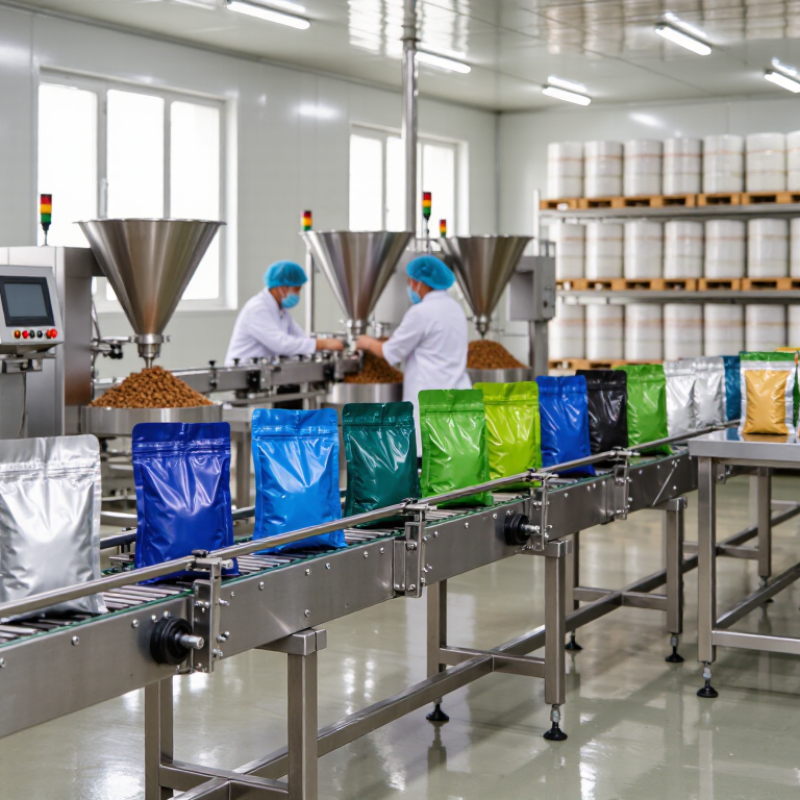
China Top 10 Contract Pet Food Packaging Suppliers?

What Contract Pet Food Packaging Suppliers Do

Contract pet food packaging suppliers manage far more than bags, cans, or pouches. They usually source approved materials, prepare artwork, fill products, seal packs, label units, and coordinate delivery. Some also provide batch coding, metal detection, weight checks, and warehouse storage. These controls matter as pet owners increasingly expect safe, convenient products. The American Pet Products Association reported that U.S. pet industry spending reached about $147 billion in 2023. That scale increases pressure on reliable packaging operations.

A capable supplier begins with product details, including moisture, fat content, particle size, and expected shelf life. These factors influence film structure, barrier performance, seal temperature, and pack format. Suppliers may arrange migration testing, oxygen transmission testing, and seal-strength checks through qualified laboratories.

The Global Pet Care Market report from Euromonitor International also identifies convenience and premiumization as important market trends. Still, packaging decisions are not always perfect. A stronger barrier can improve protection but raise material use and cost. A lighter pouch may reduce waste, yet it can tear during transport. Practical trials remain essential.

Tips: Request a documented quality plan before production. Check sample packs after heat, pressure, and transport testing. Ask who controls batch records and corrective actions. Do not judge a supplier only by machinery photos. A clean factory is useful, but traceable evidence matters more.

How to Evaluate Pet Food Packaging Manufacturers in China

China Top 10 Contract Pet Food Packaging Suppliers?

How to Evaluate Pet Food Packaging Manufacturers in China

Choosing among China’s top contract pet food packaging suppliers requires more than comparing prices. Start with packaging experience in dry food, wet food, treats, or frozen products. Ask for recent production samples, not only photographs. A glossy sample can mislead.

Review the factory’s quality system, material traceability, and food-contact documentation. Check whether films, inks, adhesives, and coatings are tested for the intended application. Request test results for seal strength, oxygen transmission, moisture resistance, and odor transfer. These details affect freshness during storage and transport. They also reveal how seriously a supplier manages risk.

Visit the production site when possible. Observe clean zones, roll storage, printing controls, and inspection records. Ask how the team handles defective batches and customer complaints. Reliable suppliers should explain corrective actions clearly. They should also provide realistic lead times, minimum order quantities, artwork controls, and backup plans for material shortages.

Do not select the lowest quotation too quickly. Low costs may hide thin layers, unstable sealing, or inconsistent color. However, expensive packaging is not automatically better. Compare performance against your product’s actual shelf-life needs. Request a pilot order before committing to large volumes. Inspect the filled packages after transport simulation and repeated handling.

No checklist is perfect. A supplier may pass an audit yet struggle during peak production. Keep communication records, approve final specifications, and schedule periodic reviews. Practical evidence matters more than confident promises.

China’s Top 10 Contract Pet Food Packaging Suppliers

China’s Top 10 Contract Pet Food Packaging Suppliers

China’s contract pet food packaging sector is expanding with private-label demand. Grand View Research reports that the global pet food packaging market continues to grow through 2030, supported by premium diets and convenient formats. China’s top 10 contract pet food packaging suppliers should therefore offer more than attractive printed pouches.

Material control matters.

Experienced suppliers should provide laminated pouches, stand-up bags, flat-bottom bags, cans, and recyclable structures. They should explain oxygen transmission, moisture barriers, seal strength, and shelf-life testing in practical terms. A useful supplier can show batch records, migration reports, and traceability documents. Vague promises are not enough.

Food safety systems require close checking. Look for facilities operating under HACCP, ISO 22000, BRCGS, or equivalent controls. Supplier audits should review pest management, allergen separation, ink handling, and warehouse humidity. According to Smithers industry analysis, packaging sustainability is becoming a stronger purchasing factor, especially for lightweight and recyclable formats. Yet recyclable packaging can lose barrier performance if poorly designed. That trade-off deserves honest testing.

China’s strongest contract suppliers usually support small pilot runs before mass production. This reduces artwork, sealing, and filling risks. Ask for retained samples and accelerated aging data. I would also compare mold charges, minimum order quantities, lead times, and export documentation. Some rankings rely too heavily on factory size. That is a weakness. Response speed and corrective-action discipline often matter more during a product launch. Supplier performance should be reviewed again after three shipments, not accepted permanently after one successful order.

Packaging Formats, Materials, and Customization Options

China’s top ten contract pet food packaging suppliers compete through formats, materials, and customization. Stand-up pouches suit dry food, treats, and smaller trial packs. Flat-bottom bags provide stronger shelf presence for larger volumes. Retort pouches support wet food and long ambient storage. According to Mordor Intelligence’s Pet Food Packaging Market report, flexible packaging remains a major growth area because it reduces material use and shipping weight.

Material selection should match product risk, not only appearance. Multilayer polyethylene structures offer seal strength and moisture protection. Polyester and aluminum layers improve oxygen and light barriers. Paper-based laminates create a softer visual identity, but recycling routes remain complicated in several markets. The Smithers global packaging outlook also identifies lightweighting and recyclable structures as key development priorities. Compostable films may sound attractive. Their barrier performance needs careful validation.

Customization can include printed graphics, matte finishes, laser scoring, zippers, handles, spouts, and tamper-evident features. Suppliers should provide migration testing, seal-strength records, oxygen transmission data, and batch traceability. ISO 22000-based systems can support food-safety management, but certification alone proves little without factory audits. I would request pilot production before approving a large order. Small defects matter. A zipper may leak after filling, or a glossy film may scratch during transport. Euromonitor International’s 2024 pet-care analysis shows continued premiumization, yet practical packaging often wins repeat purchases. Data helps, but real handling tests remain essential.

China Top 10 Contract Pet Food Packaging Suppliers? - Packaging Formats, Materials, and Customization Options
Profile Primary Packaging Formats Common Material Structures Typical Product Use Customization Options Typical Barrier Features Indicative MOQ Typical Lead Time Common Quality & Compliance Support
Profile 01 Stand-up pouches Flat-bottom bags PA/PE, PET/PE, PET/MPET/PE, or recyclable PE-based laminates Dry kibble, treats, freeze-dried food, supplements Custom size, printed artwork, resealable zipper, tear notch, handle, rounded corners, window Moisture, oxygen, aroma, light, and grease protection 10,000–30,000 pieces per size 20–35 days after artwork approval Material specifications, migration testing, seal-strength testing, batch inspection reports
Profile 02 Quad-seal bags Block-bottom bags PET/PE, BOPP/PE, PET/AL/PE, high-barrier mono-PE options Large-format dry pet food and economy packs Custom gusset, carrying handle, zipper, degassing valve, matt or gloss finish, spot varnish High mechanical strength and protection against humidity and oxidation 15,000–50,000 pieces per specification 25–40 days after final approval Food-contact declarations, print-color checks, dimensional inspection, drop testing
Profile 03 Retort pouches Spouted pouches PET/AL/PA/RCPP, PET/PA/RCPP, or transparent retort laminates Wet food, gravy, broth, puree, and semi-moist meals Spout position, easy-open notch, shaped pouch, custom print, hanging hole, multi-compartment design Heat resistance, oxygen barrier, puncture resistance, and retort durability 20,000–50,000 pieces per size 30–45 days including trial testing Retort simulation, seal integrity, burst testing, migration documentation, production traceability
Profile 04 Four-side-seal sachets Stick packs PET/PE, PET/MPET/PE, paper/PE, and recyclable PE laminates Powders, gravy toppers, supplements, sample portions Single-dose sizing, perforation, easy-tear seal, custom shape, Euro hole, multi-lane filling compatibility Moisture and aroma barrier with controlled powder protection 30,000–100,000 pieces per artwork 20–35 days after specification confirmation Seal-strength testing, powder-leak checks, net-weight verification, food-contact documentation
Profile 05 Paper bags Paper pouches Kraft paper/PE, kraft paper/PLA, paper/foil/PE, or coated paper structures Dry treats, bakery-style pet snacks, natural and premium products Custom paper grade, printing, zipper, window, gusset, handle, recycled-content selection Moderate moisture and grease resistance; barrier level depends on inner lining 10,000–30,000 pieces per size 25–40 days after artwork approval Paper composition data, coating specifications, print inspection, food-contact declarations
Profile 06 Aluminum cans Easy-open cans Aluminum body with food-grade internal lacquer and metal easy-open lid Wet pet food, pâté, mousse, and portion-controlled meals Custom can diameter, height, lid format, lithography or label, pull-tab design, carton packaging Excellent light, oxygen, moisture, and aroma protection 50,000–150,000 cans per size 45–75 days for new tooling or printed bodies Lacquer compatibility data, seam inspection, vacuum or pressure testing, sterilization records
Profile 07 Tinplate cans Ring-pull cans Tinplate steel with internal protective coating and easy-open end Wet food, chunks in gravy, pâté, and multipack formats Custom can size, lid type, label or lithographic print, carton sleeve, tray configuration Strong physical protection and full hermetic barrier after seaming 50,000–200,000 cans per size 45–80 days for tooling and production scheduling Seam teardown, coating inspection, sterilization validation, leak testing, batch coding
Profile 08 Plastic cups Lidded trays PP, PET, EVOH/PP, or multilayer PP-based thermoformed structures Wet food, mousse, treats, toppers, and single-serve meals Custom cavity size, peelable or resealable lid, printed film, transparent window, multipack tray Seal integrity with adjustable oxygen and moisture barrier 30,000–100,000 units per size 30–60 days depending on tooling Thermoforming checks, lid-seal testing, food-contact statements, dimensional and leak inspection
Profile 09 Mono-material pouches Recyclable PE bags PE/PE or PP/PP high-barrier structures with compatible zipper and spout components Dry food, treats, supplements, and sustainability-focused product lines Recyclability-oriented design, custom thickness, zipper, spout, handle, matte finish, digital or rotogravure print Designed moisture and oxygen barrier; performance depends on resin and structure 10,000–50,000 pieces per specification 25–45 days after material qualification Structure data sheets, recyclability guidance, seal testing, print inspection, migration testing
Profile 10 Small trial bags Sample sachets Digital-print pouches PET/PE, kraft/PE, recyclable PE, and short-run digital-print laminates Product launches, subscription boxes, veterinary samples, and promotional packs Low-volume artwork changes, variable data, QR codes, mixed designs, custom dimensions, fast sampling Barrier selected according to shelf-life, product fat content, and distribution conditions 1,000–10,000 pieces per design for selected structures 7–25 days after artwork approval Digital proofing, barcode verification, seal checks, material documentation, sample approval process
Data note: The figures shown are typical industry ranges for China-based contract pet food packaging production. Actual minimum order quantities, lead times, material structures, testing documents, and customization availability vary by format, artwork, tooling, filling process, and destination-market requirements.

Quality Standards, Production Capacity, and Export Services

China Top 10 Contract Pet Food Packaging Suppliers?

Choosing among China’s top contract pet food packaging suppliers requires more than comparing prices. Quality begins with controlled materials, clean production areas, and documented inspection procedures. Buyers should request food-contact declarations, migration test reports, and batch traceability records. Useful systems may include HACCP, ISO 22000, or comparable quality controls. These documents matter.

Production capacity must match the product and sales plan. A reliable supplier should explain monthly output, minimum order quantities, printing limits, and equipment availability. Ask about pouch forming, rollstock, woven bags, and recyclable structures. Factory visits can reveal practical details, such as sealed storage rooms, calibrated weighing tools, and samples retained from each batch. Capacity figures need evidence. Some factories report maximum output, not realistic contract capacity.

Export service often separates a capable supplier from a convenient one. Experienced teams can prepare packing lists, commercial invoices, certificates, pallet plans, and shipping documents accurately. They should also understand destination labeling rules and packaging requirements. Clear communication reduces delays. Response speed matters during artwork approval and production changes. Still, no supplier is perfect. A polished audit may miss weak emergency procedures or inconsistent color control. Trial orders, independent testing, and written corrective-action records provide stronger evidence. Suppliers should explain how they handle damaged rolls, late materials, and production deviations. That honesty is valuable.

China Contract Pet Food Packaging Supplier Evaluation Framework

Reference checklist covering quality standards, production capacity, and export services. The chart shows the number of practical verification items in each category and does not rank or disclose any company data.

How to use this framework: Verify food-contact compliance through HACCP or ISO 22000 systems and applicable FDA or EU requirements; confirm production capability across film extrusion, printing, lamination, and pouch conversion; and review export readiness through documentation, Incoterms, container loading, and international logistics support.

FAQS

What does a contract pet food packaging supplier usually manage?

It may source materials, prepare artwork, fill products, seal packs, label units, and coordinate delivery. Some also manage coding, weight checks, metal detection, and storage.

Which product details affect packaging choices?

Moisture, fat content, particle size, and shelf life all matter. These details influence barrier layers, seal temperatures, and package formats.

Which packaging formats suit different pet food products?

Stand-up pouches suit dry food, treats, and trial sizes. Flat-bottom bags support larger volumes. Retort pouches suit wet food and ambient storage.

How should suppliers select packaging materials?

Materials should match product risks, not only appearance. Polyethylene structures provide sealing and moisture protection. Aluminum layers improve light and oxygen barriers.

Are paper-based or compostable materials always better?

Not always. Paper laminates can look natural, but recycling may remain difficult. Compostable films still require careful barrier testing.

What customization features can packaging suppliers provide?

Options may include zippers, handles, spouts, matte finishes, laser scoring, and tamper-evident details. A zipper can still leak after filling.

Which quality tests should buyers request?

Request migration testing, oxygen transmission data, seal-strength records, and batch traceability. Test sample packs after heat, pressure, and transport exposure.

How can buyers evaluate a supplier beyond factory appearance?

Request a documented quality plan, audit evidence, corrective-action records, and pilot production. Clean machinery helps. Traceable evidence matters more.

What are the main trade-offs in lightweight pet food packaging?

Thinner materials can reduce waste and shipping weight. They may also tear during transport or lose barrier performance. Practical trials reveal uncomfortable weaknesses.

Is certification alone enough to approve a supplier?

No. A food-safety certification supports confidence, but it cannot replace factory audits and real handling tests. Nothing is perfect.

Conclusion

This guide explains what Contract Pet Food Packaging suppliers do and how they support pet food businesses from package design to large-scale production. It outlines the main factors for evaluating manufacturers in China, including material safety, printing quality, production reliability, communication, quality control, and export experience. It also presents a practical overview of China’s top 10 contract pet food packaging suppliers without focusing on brand promotion, helping readers compare their capabilities and service strengths.

The article further explores common packaging formats such as pouches, bags, sachets, cans, and cartons, along with material choices, barrier properties, closures, sizes, and customization options. It also highlights the importance of certifications, traceability, production capacity, inspection procedures, delivery coordination, and international shipping support. By considering these areas together, buyers can select a dependable packaging partner that matches their product requirements, market goals, budget, and long-term supply expectations.


Elowen

Elowen

Elowen is a highly experienced marketing professional dedicated to helping businesses understand innovative products, emerging market trends, and practical solutions for sustainable growth. With a strong background in strategic communication, customer research, content development, and digital......