Family-owned wet pet food manufacturing in Northern Ireland since 1972
+44 (0) 28 8778 4641
Family-owned wet pet food manufacturing in Northern Ireland since 1972
+44 (0) 28 8778 4641
Choosing among the 7 Best Private Label Pet Food Manufacturers requires more than comparing attractive packaging or low minimum order quantities. A reliable partner must combine safe sourcing, precise formulation, stable production, and transparent quality controls. Greg Aldrich, Ph.D., a respected pet food formulation specialist, captures this responsibility clearly: “Pet food is not just food; it is nutrition, safety, and trust.”
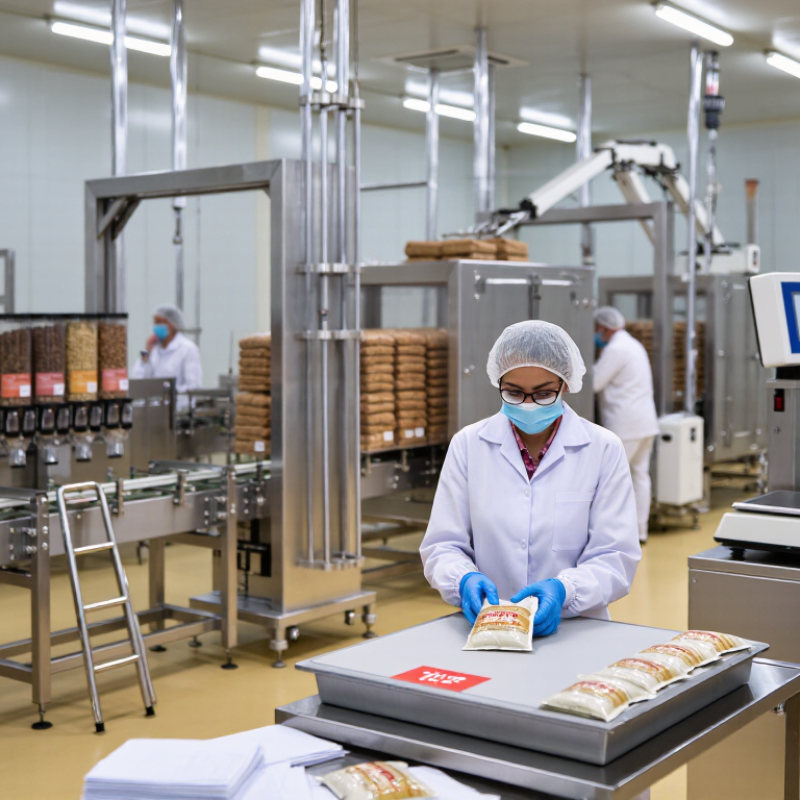
That trust becomes visible on the factory floor. It appears in labeled ingredient bins, calibrated weighing equipment, sealed sample bags, and documented testing records. Strong manufacturers can support dry kibble, wet food, treats, or specialized recipes while explaining their capabilities in plain language. They should also discuss nutritional adequacy, shelf-life testing, traceability, and applicable regulatory requirements before accepting an order.
Price still matters. It should not lead the decision.
The best Private Label Pet Food Manufacturing partners offer practical guidance instead of making exaggerated promises. They help brands match recipes with customer needs, production volumes, and realistic launch timelines. Some provide formulation support and packaging services. Others focus on flexible batches or premium ingredient sourcing. Neither approach is automatically better.
No shortlist is flawless. A manufacturer with excellent technology may have demanding minimums. Another may offer lower costs but limited customization. That is the uncomfortable part. Buyers must verify certificates, audit procedures, test results, recall protocols, and communication standards directly. This guide compares seven notable manufacturers through those details, helping emerging and established pet brands choose a partner based on evidence, not polished marketing alone.
What Private Label Pet Food Manufacturing Means
Private label pet food manufacturing means a factory produces food for another company’s label. The buyer usually controls the recipe, packaging, product claims, and retail strategy. The manufacturer manages ingredient sourcing, processing, filling, testing, and batch documentation. This model allows a new pet food business to sell products without building its own facility.
A reliable manufacturer should explain its quality system clearly. Ask about ingredient approval, allergen controls, moisture testing, pathogen screening, and lot traceability. Request sample specifications and recent testing records where available. Production capacity also matters. A small trial order may need different equipment from a large retail launch. Minimum order quantities, lead times, storage conditions, and packaging formats should be agreed upon early. A polished sample is useful, but it does not prove consistent production. That part requires evidence.
Tips: Visit the facility if possible. Check how ingredients are stored and labeled. Confirm who reviews nutritional targets and product claims. Keep written approval records for every formula change. Do not choose a supplier only because its price looks attractive. Low costs can reflect weaker testing or limited support, though not always. Even experienced buyers miss details sometimes. A forgotten carton size or unclear shelf-life requirement can delay an entire shipment. Review the contract, batch process, and communication routine before placing a larger order.
Private label pet food manufacturing allows a retailer or pet-care company to sell products made by a third-party facility under its own packaging and product specifications. The comparison below uses manufacturer profiles rather than company or brand names. Minimum order quantities, certifications, lead times, and formulation options should be confirmed directly with each supplier.
| Profile | Primary Manufacturing Capability | Common Product Formats | Typical Private Label Support | Indicative MOQ Range | Typical Lead Time | Best Suited For |
|---|---|---|---|---|---|---|
| Profile 1 | Dry-food extrusion with controlled cooking, drying, coating, and cooling stages | Kibble for dogs and cats; standard and customized shapes | Recipe adjustment, nutrient targets, packaging coordination, and label review | Usually 1–5 metric tons per formula or production run | Approximately 8–16 weeks after formula and artwork approval | New brands seeking scalable everyday dry food |
| Profile 2 | Wet-food cooking, filling, sealing, and retort sterilization | Cans, trays, and shelf-stable pouches | Texture development, can or pouch specifications, process validation, and regulatory documentation | Often 10,000–50,000 units per SKU, depending on package type | Approximately 12–24 weeks, including packaging setup | Premium wet-food lines and complete-meal products |
| Profile 3 | Freeze-drying of raw or gently processed ingredients with controlled moisture removal | Freeze-dried complete meals, toppers, treats, and raw-food pieces | Ingredient sourcing, recipe scaling, moisture and water-activity testing, and packaging advice | Commonly 500–2,500 kilograms per product or production batch | Approximately 10–20 weeks after product approval | Specialty brands positioned around high-meat or minimally processed products |
| Profile 4 | Treat and chew production using baking, molding, drying, or low-temperature processing | Biscuits, dental chews, jerky-style treats, and training treats | Shape development, flavor options, packaging formats, and shelf-life testing | Usually 500–5,000 kilograms or 5,000–25,000 retail units | Approximately 6–14 weeks after specifications are finalized | Retailers testing smaller product ranges or seasonal launches |
| Profile 5 | Supplement blending, encapsulation, soft-chew production, or liquid filling | Powders, oils, tablets, capsules, and functional soft chews | Ingredient validation, dosage calculation, stability testing, and compliant label support | Often 1,000–10,000 units per SKU, depending on format | Approximately 8–18 weeks after formula and packaging approval | Brands focused on joint, digestive, skin, coat, or general wellness products |
| Profile 6 | Small-batch production with flexible batching and contract formulation services | Dry food, treats, toppers, and limited-ingredient recipes | Pilot batches, sample development, ingredient substitutions, and shorter production runs | Commonly 250–1,000 kilograms or 2,000–10,000 units | Approximately 6–12 weeks after formula approval | Startups validating demand before moving to high-volume production |
| Profile 7 | Multi-format production with integrated sourcing, packaging, testing, and fulfillment services | Dry food, wet food, treats, toppers, and supplements | End-to-end project management, custom formulation, quality testing, packaging, and logistics coordination | Typically 1–10 metric tons or 10,000–50,000 units, depending on format | Approximately 12–24 weeks for a new multi-product program | Established retailers building a broader private label portfolio |
Request recent laboratory reports, ingredient records, and batch-control documents. Look for nutritional accuracy and microbiological safety. Paperwork matters.
Ask the manufacturer to trace each ingredient from supplier to finished package. The records should show supplier names, batch numbers, and receiving dates. Gaps deserve attention.
Visit when possible. Inspect storage temperatures, sanitation routines, batch records, and packaging controls. A video call helps, but it cannot show everything.
A small pilot batch tests the real production process before a large order. Compare its texture, aroma, formula, and label with the approved sample. Sales samples can look perfect.
Confirm the recipe suits the intended life stage and dietary needs. Review calories, feeding directions, allergens, and nutrient levels with a qualified professional. “Premium” proves little.
Compare minimum order quantities, lead times, packaging options, and change-notification policies. Check production capacity and quality systems too. Cheap can become expensive.
Ask for written recall procedures and clear quality responsibilities. Confirm how the manufacturer reports supplier changes, formula changes, and packaging defects. Silence is a warning.
Request references from businesses with similar order volumes. Check whether documents arrive promptly and match the supplied samples. Be realistic: delays and communication gaps may still appear after launch. Leave room for correction.
Private Label Pet Food Manufacturing allows businesses to create and sell pet food under their own brand without operating a complete production facility. This approach can provide access to specialized recipes, flexible product formats, packaging support, and quality control services. However, choosing a suitable manufacturer requires careful evaluation of ingredient sourcing, production capabilities, safety procedures, facility standards, customization options, and communication practices.
This guide reviews seven leading types of private label manufacturers and explains how they may differ in product categories, certifications, minimum order quantities, pricing structures, and development support. It also highlights the importance of comparing nutritional formulation, testing procedures, packaging flexibility, production timelines, and scalability. By matching a manufacturer’s strengths with your brand’s target market, budget, product goals, and expected growth, you can make a more informed decision and build a dependable supply partnership.